
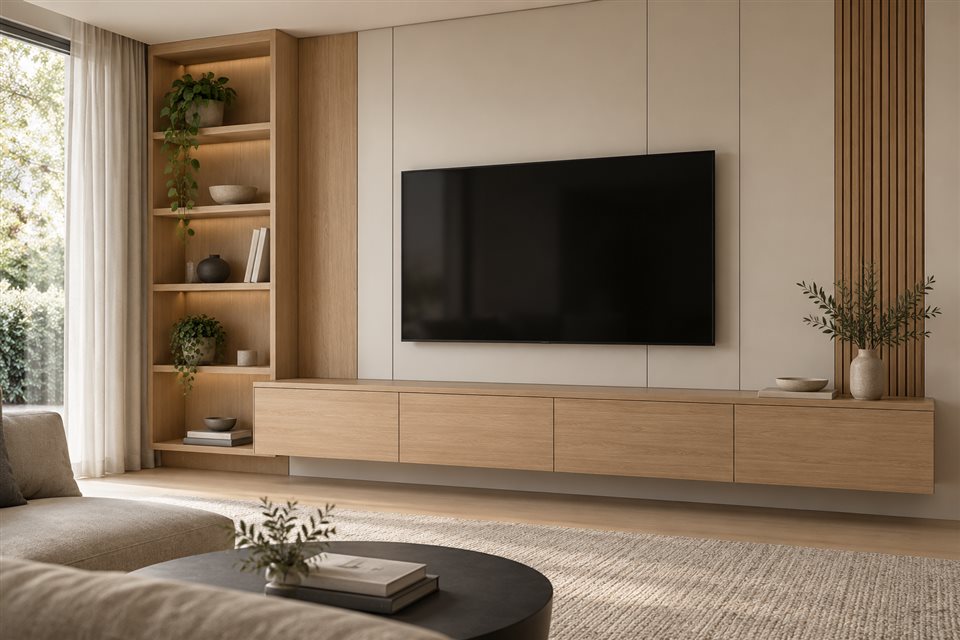
A TV wall can bring a living room together, but a good-looking reference image is only the starting point. The finished unit also needs somewhere for the equipment, a sensible cable route and storage that suits your routine.
These custom TV unit design ideas focus on the decisions worth making before fabrication. Whether you are updating an apartment or planning a villa living room in Dubai, start with the wall you have and the way you watch, store and use the space.
The Short Answer
Choose a TV unit layout around your seating, screen, equipment and storage needs before selecting the finish. Floating consoles, closed cabinets and wall panels can all work, provided the wall, fixings, ventilation and service access are planned for the actual installation.
In This Guide
- Custom TV Unit Design Ideas: Choose a Layout That Serves the Room
- Set the Screen Position From Your Seating
- Plan TV Unit Cable Management and Equipment Access
- Choose TV Wall Panel Finishes With the Whole Room in View
- Make Small Living Room Storage Easier to Use
- What to Include in a Custom TV Unit Quotation
- Frequently Asked Questions
Custom TV Unit Design Ideas: Choose a Layout That Serves the Room
Begin with the viewing wall rather than the whole room’s maximum width. Note doors, windows, sockets, air-conditioning controls and any awkward corners. Decide what needs to be stored and what you would like to display.
Two common starting points are a low console with a clear wall above it, or a wider arrangement that combines a screen area with selected shelves and cabinets. You can mix open and closed storage without filling every available space.
Floating TV unit for a lighter-looking wall
A floating console leaves the floor visible and can make a compact arrangement feel less bulky. Its suitability depends on the wall construction, fixings and the weight of the finished unit and contents. Have those details assessed before committing to a suspended design.
TV unit with storage for a busy living room
Closed cupboards can hold items you do not want on display, while a few open shelves can keep frequently used pieces accessible. List what will go inside before setting cabinet depth, shelf spacing and door positions. A floor-standing layout may be worth comparing with a floating one.
Set the Screen Position From Your Seating
Mark the proposed screen outline and console position on a simple room sketch. Check the view from the seats you actually use, including the side of an L-shaped sofa. The right arrangement should feel comfortable without forcing the furniture into an awkward position.
Use the actual television dimensions, not just its advertised diagonal size. Include its stand if it will sit on the console, or the proposed bracket and access requirements if it will be mounted. A future screen upgrade may need more space than the current model.
Check reflections at the time of day you usually watch. A new wall panel cannot solve every glare issue; curtain or blind supply and installation may form part of the room plan. Leave room for doors, curtains and regular walking routes when deciding the unit’s depth.
Plan TV Unit Cable Management and Equipment Access
Write down every device: television, soundbar, games console, receiver, router or set-top box. Record their dimensions with connected plugs and cables, and keep the relevant manuals available. A cabinet that fits the equipment body may still be too shallow for its connections.
Plan where cables enter, how they travel between compartments and how a device can be removed later. Removable access panels or reachable openings can be more useful than a completely sealed back. Confirm socket access before fabrication, and arrange any electrical alterations with an appropriately qualified professional.
Ventilation needs to follow the equipment manufacturer’s instructions. Sony’s ventilation guidance explains that TV openings should remain unobstructed and directs owners to the specific model manual. Do not treat decorative slots or one generic clearance dimension as suitable for every screen and device.
Have a TV Wall in Mind?
Share a wall photo, your TV model and the equipment you use. Let’s discuss a layout that keeps storage, cables and access in mind.
Choose TV Wall Panel Finishes With the Whole Room in View
TV wall panel design works best when the proportions and finishes relate to the surrounding interior. Compare a plain painted backdrop, a selected decorative panel or a timber-look finish against the floor, curtains and sofa. A small sample is useful, but also consider how a repeated pattern will look across the full wall.
Separate the decorative surface from the structure carrying the screen. Confirm how the television is supported, where panel joints fall and which parts can be removed for access. A decorative panel should not be assumed to provide a suitable fixing base.
If lighting is part of your brief, discuss the source, control, glare and maintenance access before fabrication. Ask for it to be included explicitly rather than assuming it comes with the joinery. Keep the screen area calm enough for comfortable viewing.
Make Small Living Room Storage Easier to Use
For a smaller Dubai apartment, a shallow, carefully planned unit may be more useful than a large feature wall. Check how far drawers and doors project when open. Make sure the contents can be reached without moving a coffee table every time.
Choose a realistic balance between display and concealed storage. If you have books, measure their height; if you store games equipment, check the controllers and accessories too. Adjustable shelves can be discussed where changing storage needs are likely.
Think about cleaning around the unit and the level of everyday upkeep you want. Open shelves show objects clearly but need regular attention. When furniture is also being refreshed, use our sofa reupholstery vs replacement guide to decide what you plan to keep before finalising the room layout.
What to Include in a Custom TV Unit Quotation
Send a wall photo, approximate wall dimensions, your television model and a list of equipment with your enquiry. Include your preferred reference images and explain which features you like in each one.
- Layout: overall dimensions, cabinet arrangement and screen position.
- Construction: specified board or timber, finish, visible edges and hardware.
- Storage: shelves, drawers, door operation and any agreed loads.
- Technical details: bracket arrangements, wall checks, ventilation and cable access.
- Scope: supply, installation, panels, lighting and electrical work where agreed.
- Handover: access arrangements, timing, care instructions and any written warranty terms.
Glow Space Studio provides custom joinery, TV units and wall panels in Dubai and across the UAE. Share your requirements so the proposed unit can be discussed around your property, equipment and budget.
Frequently Asked Questions
Is a floating TV unit suitable for every wall?
No. Wall construction, fixings and the intended load need to be assessed. Discuss a suitable support method or an alternative layout before fabrication.
How wide should a custom TV unit be?
There is no single correct width. Work from the room dimensions, screen, storage needs, adjacent openings and the visual balance you want. Confirm the actual measurements before ordering.
Can cables be hidden inside a TV wall unit?
A cable route can be planned as part of the unit, but sockets, connectors, ventilation and future access must remain practical. Confirm the route and any electrical work in the agreed scope.
Are wall panels and lighting included in custom joinery?
Only when specified in the quotation. List the panels, finishes, lighting, controls and installation work you want so inclusions and exclusions are clear.
About Glow Space Studio
Glow Space Studio brings material supply, professional installation and project coordination together for interior upgrades in Dubai and across the UAE. Explore Custom Joinery, TV Units & Wall Panels in Dubai or contact the team to discuss your property and the work you need.
Material Guidance & Further Reading
These references provide general product guidance. Follow the instructions for the materials and equipment selected for your project. A reference does not imply a supply partnership.